Key takeaways
- Every gutter material has trade-offs in corrosion, movement with heat, upkeep and looks.
- Galvanized steel is protected only while its zinc coating stays intact, while copper forms its own protective layer over time.
- In heavy rain, size, slope and the number of downspouts matter as much as the material.
On the Texas Gulf Coast, gutters face long, hot summers, high humidity and intense storms. Near the water they also face salty air. A material that suits a dry inland climate may need more care here. The age and style of the house matter too.
This article compares materials, not companies. It does not give prices or lifespans, because both depend on the product, the installation and the house. It sets out how each material behaves, based on general trade knowledge and on the published guidance cited below.
What the Gulf Coast climate asks of a gutter
Three things stand out. First, rain often falls at high intensity. The Copper Development Association's Copper in Architecture Design Handbook lists 5-minute rainfall intensities of 8.2 inches per hour for Houston and 7.6 inches per hour for San Antonio, for storms expected about once in 10 years. A gutter of any material has to be sized and sloped for rain like that.
Second, heat makes materials expand and contract. The National Park Service's Preservation Brief 4 on roofing notes that metal failure "can occur at the joints or at any protrusions" as a result of the metal's "alternating movement to thermal changes." Long gutter runs need room to move.
Third, moisture and salt speed up corrosion. Near the coast, salt in the air settles on metal surfaces, and humid air keeps those surfaces damp for longer. This matters most for steel, and for any place where two different metals touch.
Seamless metal gutters
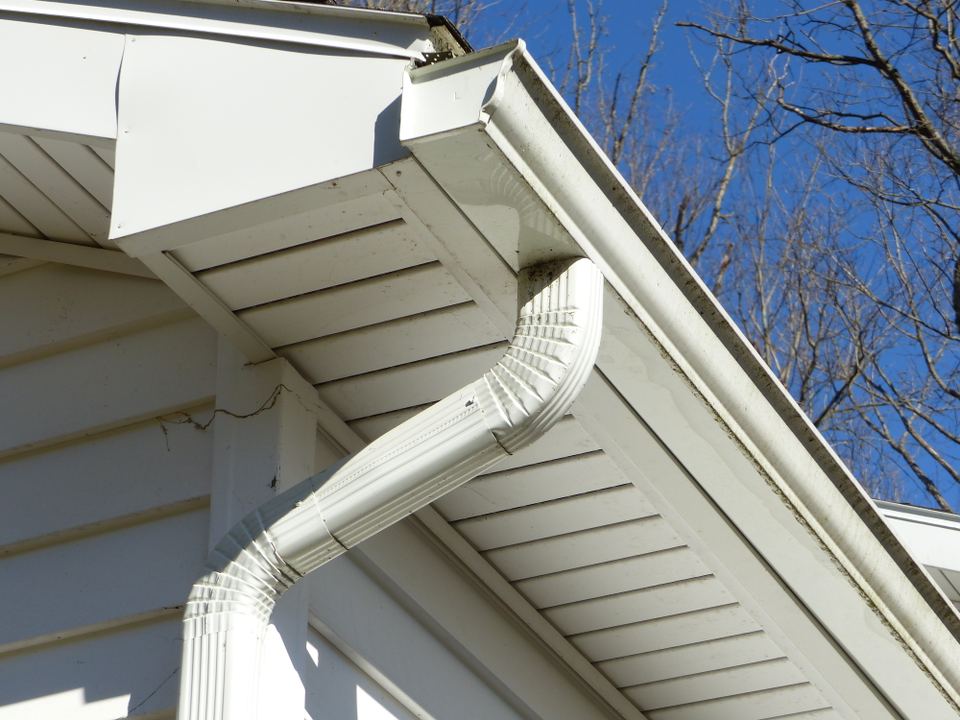
Seamless gutters are formed on site from a coil of metal and cut to the length of each run. Because they have fewer joints, there are fewer places for leaks to start. The Texas Water Development Board's Texas Manual on Rainwater Harvesting lists seamless aluminum among the most common gutter materials and notes that seamless aluminum gutters "are usually installed by professionals."
Aluminum does not rust, which suits humid air. It is light, and thin sections can dent under impact, for example from hail or a ladder. A painted finish helps with looks. Seamless runs can also be formed from other metals, such as steel or copper.
One caution applies to all metal gutters. The CDA handbook explains that when dissimilar metals touch in the presence of moisture, "galvanic action occurs, resulting in the deterioration of the metal with the lower galvanic number." Aluminum ranks lowest on its list. Fasteners, straps and repair parts should be compatible with the gutter metal. The seamless gutter installation page covers this service.
Galvanized steel gutters
Galvanized steel is steel with a zinc coating. It is heavy and rigid. Its weak point is the coating. The NPS roofing brief says that "iron rusts unless it is well-painted or plated." Of plating and galvanizing, it adds that the method "is durable only as long as the coating remains intact. Once the plating is worn or damaged, the exposed iron will rust."
In humid or coastal air, that means scratches, cut ends and worn spots need attention. Standing water and wet debris left in the trough also wear on the coating. Regular cleaning and touch-up painting help.
Zinc also reacts with copper. The CDA handbook names "aluminum and zinc" as the principal metals of concern in direct contact with copper. Its guidance is to prevent direct contact "with the use of separating materials, such as specific paints or gaskets." So a galvanized gutter should not be joined straight to copper parts.
Copper gutters
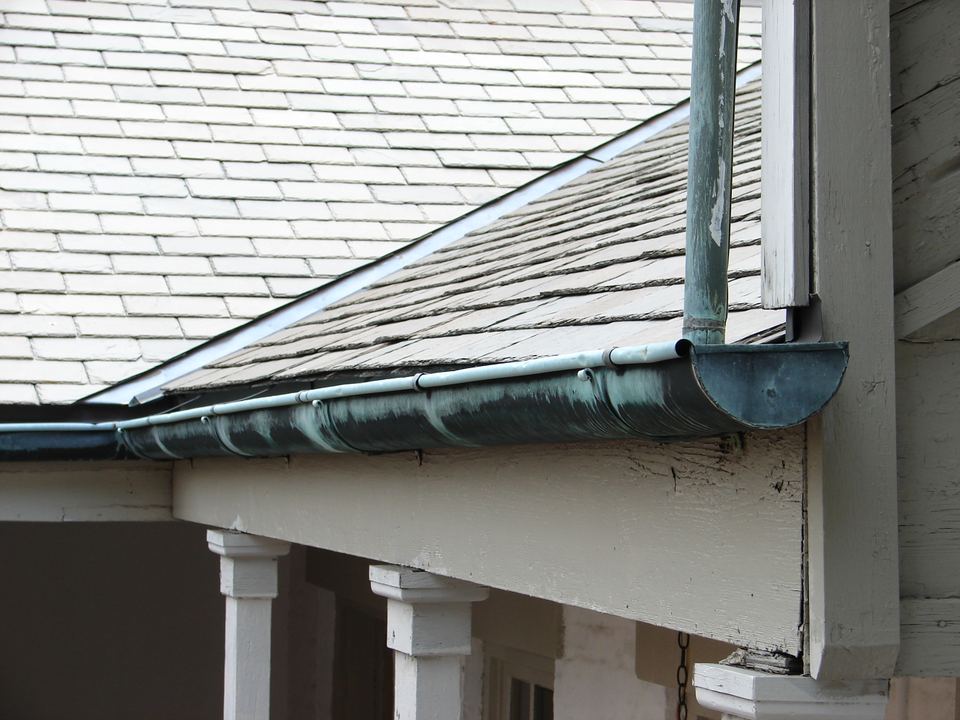
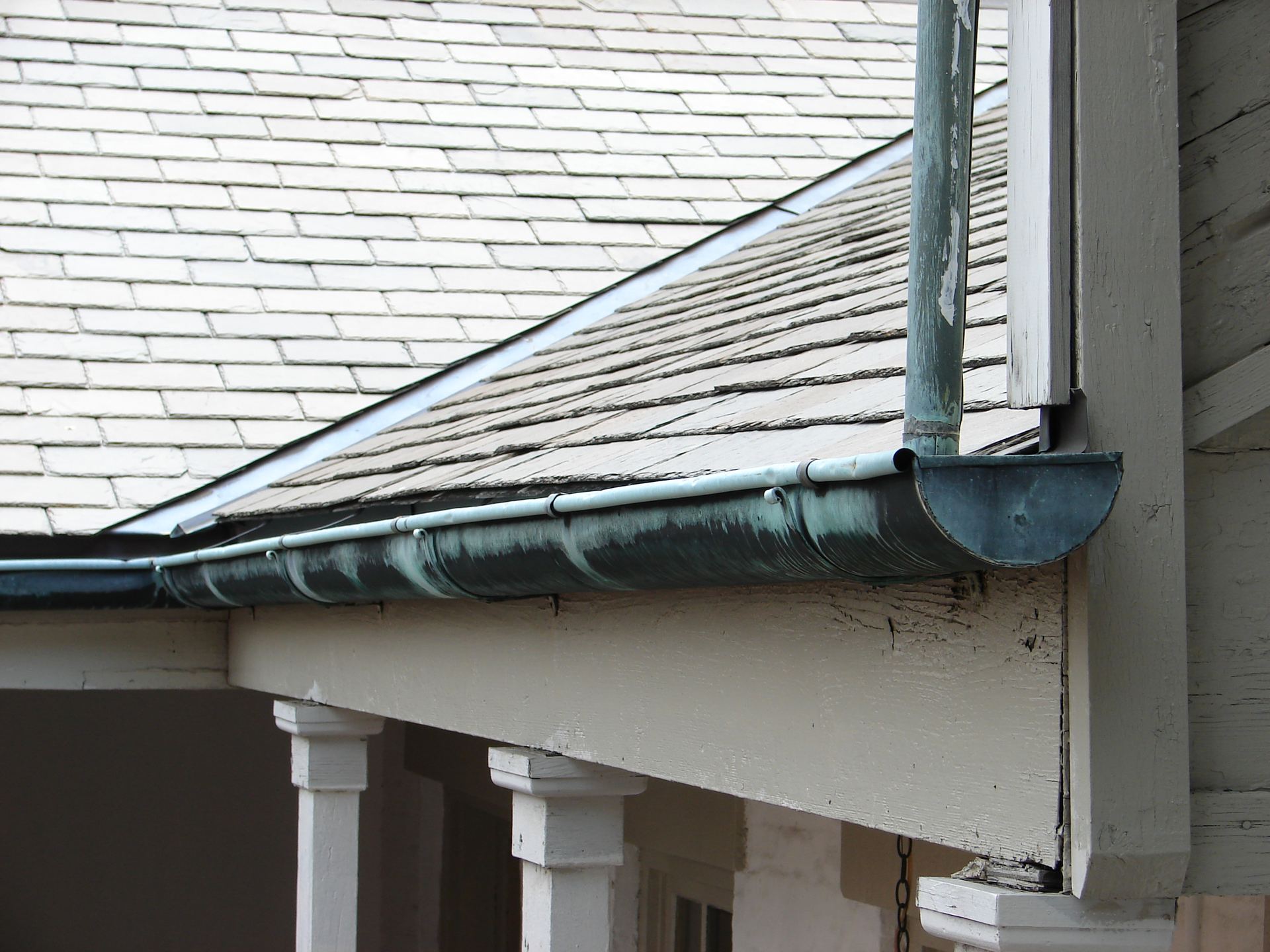
Copper is chosen mostly for its look and its resistance to corrosion. The CDA handbook describes copper as having "low maintenance, high resistance to corrosion and long life." The CDA is a copper industry body, so its view of copper is favorable. The patina it describes, though, is well established. The handbook says the green patina "eventually covers the surface and adheres tightly to it, thus providing a protective layer against further weathering."
Coastal air plays a part. The handbook says the patina forms faster "in some metropolitan, marine, and industrial areas," and that "patinas formed near the sea contain slightly different percentages of copper sulfates, chlorides and carbonates" than those formed elsewhere. The color change is gradual and varies from house to house.
Copper has its own cautions. It moves with heat, and the handbook says expansion joints in copper gutters "must be provided to allow for the natural expansion and contraction of copper caused by thermal changes." Runoff from copper can leave green stains on light, porous surfaces such as stone. And copper water should not drain onto aluminum, because "traces of copper salts in the wash may accelerate corrosion of the aluminum." See copper gutter installation for that service.
PVC gutters
PVC gutters, often sold as vinyl gutters, are plastic. They are light, and they do not rust or corrode in salt air. The TWDB manual lists "half-round PVC" and "vinyl" among the most common materials for gutters and downspouts.
Sunlight and heat are the main concerns. Texas A&M AgriLife's rainwater conveyance guidance advises that "PVC pipe should be painted to reduce UV sunlight breakdown." That guidance is about PVC pipe, but it makes a wider point: strong sun affects plastics over time. Plastic also expands and contracts with temperature, so joints and hangers need to allow for movement.
Plastic gutters are usually sold in sections joined with connectors, so they tend to have more joints than seamless metal. Each joint is a place to check for leaks. A hard impact can crack plastic.
Wood gutters and older homes
Wood gutters are found mainly on older homes, where they are part of the original look. Wood does not corrode, but it needs steady care. It has to be sealed or treated, kept clean and allowed to dry. Wet debris left in a wood gutter holds moisture against the wood, and humid weather slows drying.
For historic houses, the NPS Preservation Brief 4 advises that where gutters and downspouts are added that were not on the building historically, "the additions should be made as unobtrusively as possible." It also says the roof should be inspected "at least twice a year."
Where a wood gutter is sound, repair keeps the original character. Where it has rotted through, a matching replacement or a different material may be considered. See wood gutter repair for that service.
Matching the material to the house
No material is right for every home. A few questions help. How close is the house to salt water? How many trees overhang the roof? Does the age or style of the house call for a certain look? How much upkeep can you take on? Are the current gutters sized and sloped well for heavy rain?
The answers point to trade-offs. Seamless metal limits joints. Galvanized steel is rigid but depends on its coating. Copper resists corrosion but needs room to expand and care with other metals. PVC does not rust but is affected by sun and heat. Wood suits some older homes but needs the most upkeep.
Texas Gutter Solutions does not carry out gutter work. Each material has its own page in our list of gutter services. If your gutters need attention, you can send a Quick Quote Online request and we will look for a suitable independent provider. Provider availability depends on your location and the job.
Frequently asked questions
**Which gutter materials do not rust?** Aluminum, copper, PVC and wood do not rust. Galvanized steel resists rust only while its zinc coating stays intact, according to the National Park Service's roofing guidance.
**Why do copper gutters turn green?** Copper forms a patina when it is exposed to the atmosphere. The Copper Development Association says this layer adheres tightly and protects the surface against further weathering.
**Can copper touch aluminum or galvanized parts?** Direct contact should be avoided. The Copper Development Association says copper causes corrosion of aluminum and zinc it touches, and that copper runoff can corrode aluminum.
**Is seamless a type of material?** No. Seamless describes how the gutter is made: formed on site from a coil into long runs with fewer joints. Aluminum is a common seamless metal.
Sources
Copper in Architecture Design Handbook (CDA Publication A4050), Copper Development Association.
Preservation Brief 4: Roofing for Historic Buildings, National Park Service, U.S. Department of the Interior.
The Texas Manual on Rainwater Harvesting, Third Edition, Texas Water Development Board.
Conveyance - Rainwater Harvesting, Texas A&M AgriLife Extension Service.