Key takeaways
- Gutters and downspouts are the conveyance stage that carries roof water to storage.
- Size, slope, debris control and overflow routing all need attention before a tank is added.
- The Texas Water Development Board and Texas A&M AgriLife publish Texas guidance on rainwater harvesting.
Rainwater harvesting has a long history in Texas. The Texas Water Development Board notes that before large water systems, "rainwater was collected from roofs and stored on site in tanks known as cisterns." Today many homeowners use rain barrels or tanks to water gardens and landscapes.
Texas A&M AgriLife's introduction to harvesting rainwater quotes an Extension horticulturist: "Infrequent rainfall is exactly the reason to harvest rainwater." When rain does come, the gutters decide how much of it reaches storage.
Gutters and downspouts are the conveyance stage
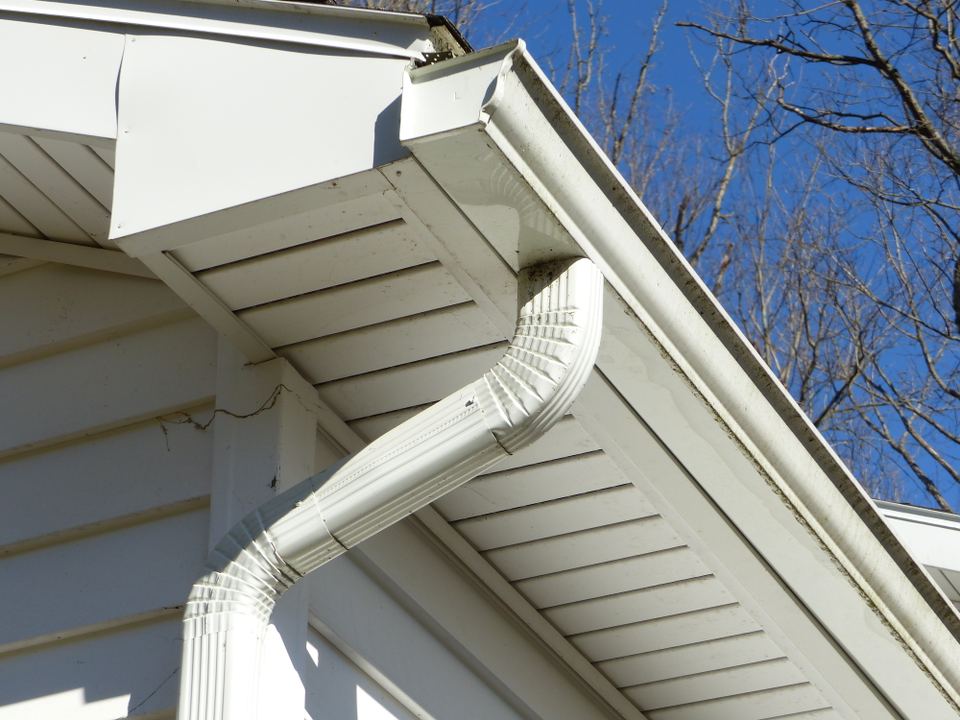
Texas A&M AgriLife's conveyance guidance calls the conveyance system "a fancy term for the gutters and downspouts." These are the parts that move water from the roof to storage. The Texas Manual on Rainwater Harvesting adds a drop outlet and elbows that "allow the downspout pipe to snug to the side of the house," plus the brackets and straps that fasten the gutters and downspout to the fascia and wall.
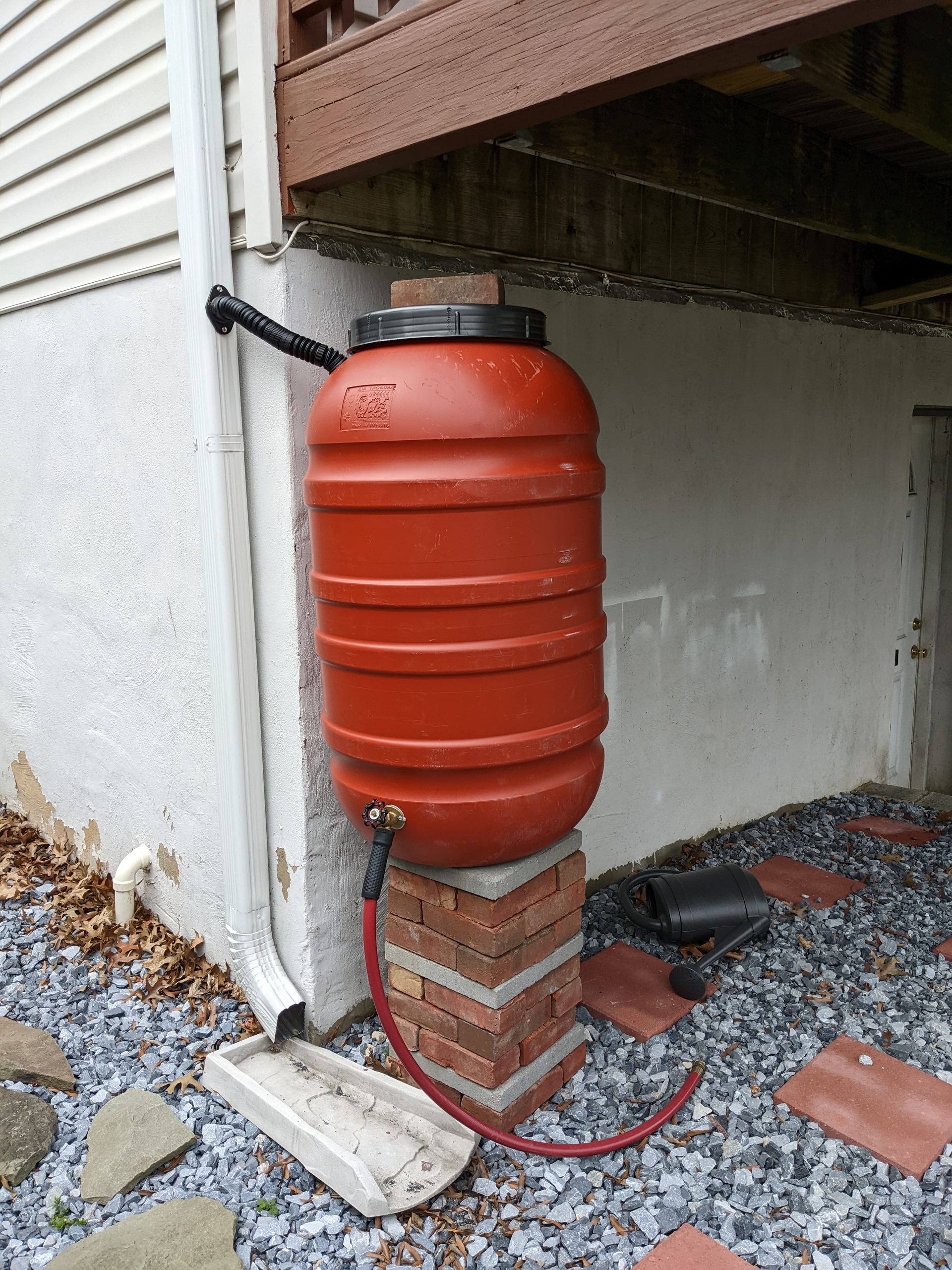
AgriLife's introduction lists the parts of a simple system. The first is "a method to direct the water, such as a rain gutter and downspout." Then comes something to store the water in, and a way for water to reach the container. In other words, the gutters come first.
If the water might ever be used for drinking, gutter material matters. The TWDB manual warns that for potable systems, "lead cannot be used as gutter solder, as is sometimes the case in older metal gutters," because slightly acidic rain could dissolve the lead. AgriLife's article adds that drinkable water needs a more advanced system and special equipment.
How much water a roof sends to your gutters
Roofs collect more water than many people expect. The TWDB manual states that "in theory, approximately 0.62 gallons per square foot of collection surface per inch of rainfall can be collected." AgriLife's article for beginners puts it another way: "1,000 square feet of roof can produce as much as 620 gallons of water for harvest with 1 inch of rain."
All of that water passes through the gutters, often quickly. The manual notes that in practice some water is lost to "first flush, evaporation, splash-out or overshoot from the gutters in hard rains, and possibly leaks." A gutter that overflows in a storm loses water that could have been stored.
Hard rain is common on the Gulf Coast. The Copper Development Association's design handbook lists a 5-minute rainfall intensity of 8.2 inches per hour for Houston for storms expected about once in 10 years.
Sizing gutters and downspouts for heavy rain
AgriLife's conveyance guidance says gutters "should be sized so that they adequately move rainwater runoff from a 100-year storm event." It explains that such a storm "has a 1% chance of happening every year." As a general rule, it says, gutters should be at least 5 inches wide.
For downspouts, the same guidance gives a rule of thumb: "Provide one square inch of downspout area for every 100 square feet of roof area." By that rule, a 2-inch by 3-inch downspout serves about 600 square feet of roof, and a 3-inch by 4-inch downspout about 1,200 square feet. Slope matters too. AgriLife recommends sloping gutters at 1/16 inch per foot, with the front edge half an inch lower than the back.
Rules of thumb have limits. The TWDB manual says roof valleys, too few downspouts, long or steep roof slopes and poor maintenance can all make gutters overrun, and that such variables "make any gutter sizing rules of thumb difficult to apply." It advises paying special attention to where along an eave overrunning may occur.
Keeping debris out of the system
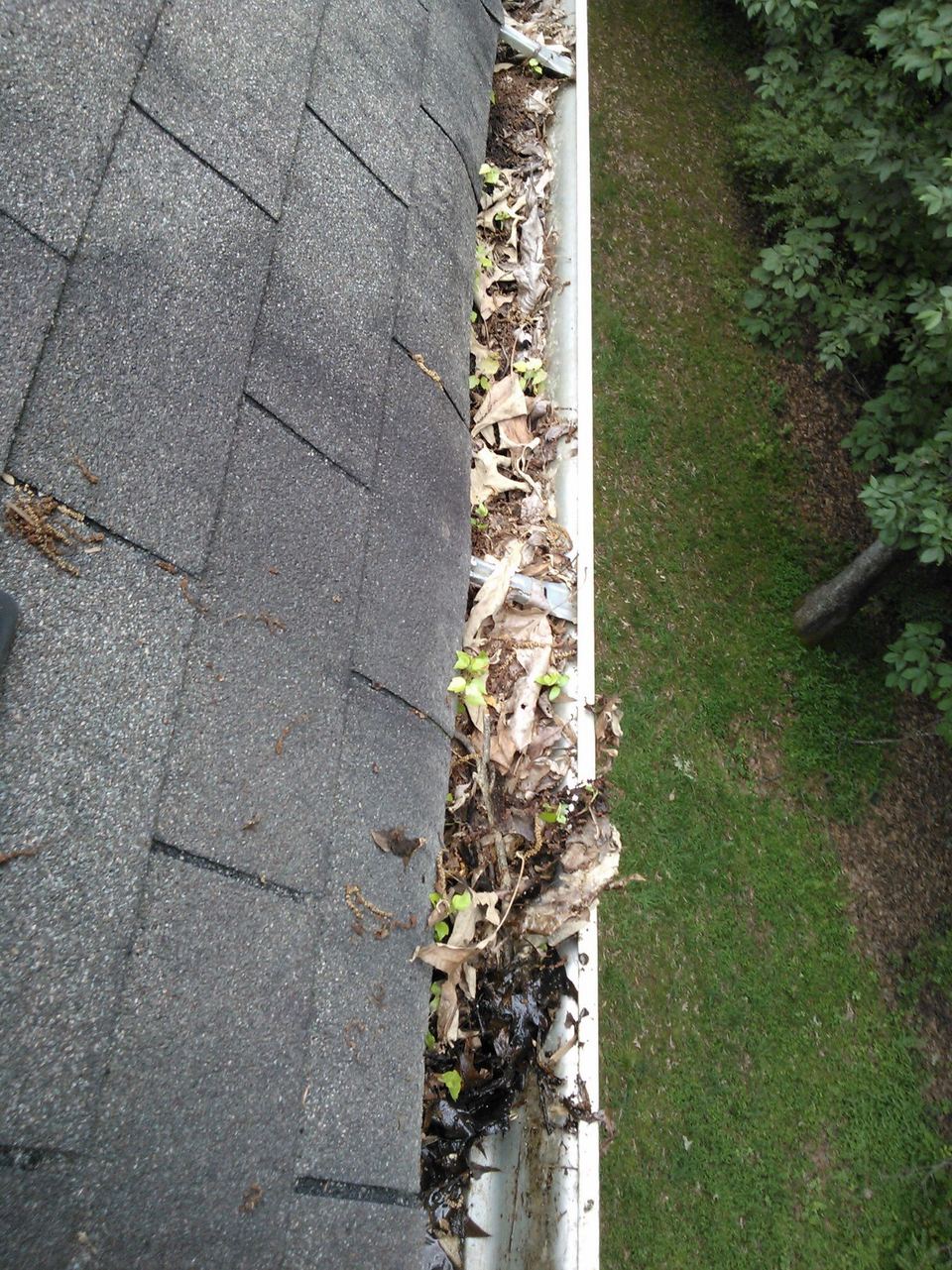
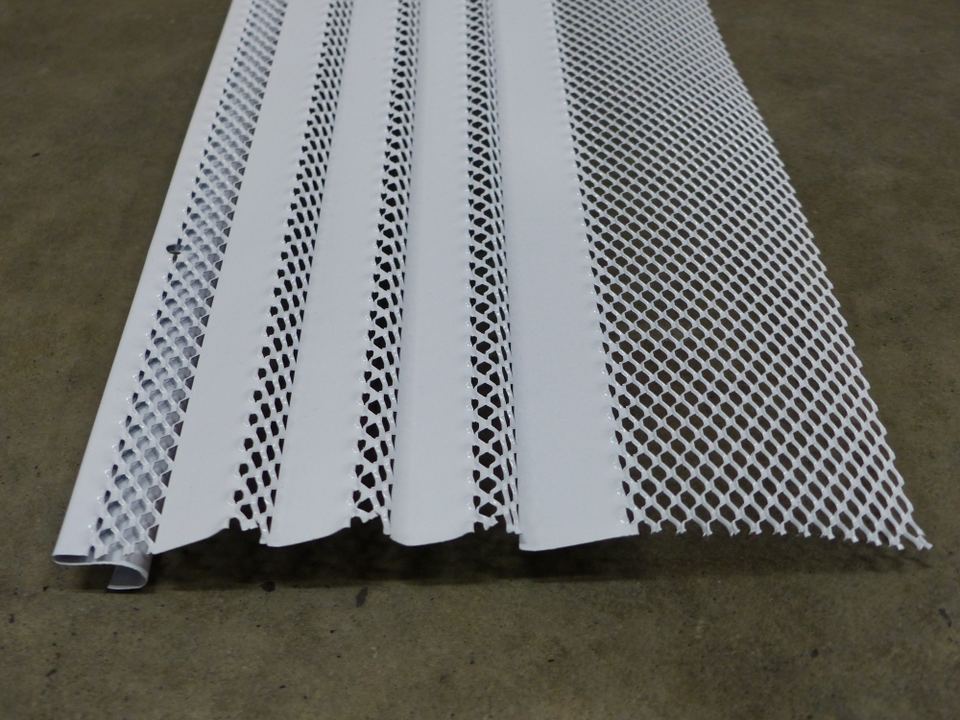
Leaves and grit that reach a tank lower water quality and can block pipes. The TWDB manual says "the defense in keeping debris out of a rainwater harvesting system is some type of leaf screen along the gutter or in the downspout." Options include mesh leaf guards along the gutter, strainer baskets in the drop outlet and filters fitted into the downspout.
Screens need upkeep. The manual warns: "Leaf screens must be regularly cleaned to be effective. If not maintained, leaf screens can become clogged and prevent rainwater from flowing into a tank." It adds that built-up debris "can also harbor bacteria and the products of leaf decay."
Many systems also use a first-flush diverter. The manual explains that it "routes the first flow of water from the catchment surface away from the storage tank," which helps clear smaller contaminants such as dust and pollen. Our article on gutter guards for Houston homes explains how covers work, and gutter cleaning is the place to start if your gutters are already blocked.
Directing water away from the foundation
Not every downspout feeds a tank, and tanks fill up. The extra water has to go somewhere safe. The TWDB manual says "any tank overflow and drainage should be routed so that it does not affect the foundation of the tanks or any other structures." It also says runoff from tank overflow should not enter septic system drainfields.
Downspouts that do not feed a tank should discharge away from the house, through an extension, a splash block or a drain line, so water does not pool against the foundation. This is standard practice for any gutter system, with or without a barrel.
Tanks are heavy when full. The manual notes that "water weighs just over 8 pounds per gallon," so a tank should sit on a stable, level pad that overflow cannot wash out. It also says tanks "must be covered and vents screened to discourage mosquito breeding."
Texas rules and where to read more
Texas has given rainwater harvesting close attention. The TWDB rainwater harvesting page says the state "has enacted many laws regulating the practice of collecting rainwater." It states that "Texas Tax Code 151.355 allows for a state sales tax exemption on rainwater harvesting equipment" and that "Texas Property Code 202.007 prevents homeowners associations from banning rainwater harvesting installations." Laws change, so check the current text before you rely on either point.
For practical detail, the TWDB's Texas Manual on Rainwater Harvesting covers system parts, water quality and treatment, and system sizing. Texas A&M AgriLife runs a rainwater harvesting website on each part of a system. Its article for beginners also points readers to their local AgriLife Extension horticulturist or Texas Master Gardeners group.
Getting your gutters ready
Before you add a barrel or tank, make sure the gutters are clean, firmly attached, sloped toward the downspouts and not leaking. If a run overflows in heavy rain, deal with that first. A leaking or sagging gutter sends less water to storage and more to the wrong places.
Texas Gutter Solutions does not install gutters or rainwater systems. For damaged gutters, see seamless gutter repair. If your gutters need attention, you can send a Quick Quote Online request and we will look for a suitable independent provider. Provider availability depends on your location and the job.
Frequently asked questions
**How much water can a roof collect?** In theory, about 0.62 gallons per square foot of roof per inch of rain, according to the Texas Water Development Board. Real systems collect less because of first flush, splash-out, evaporation, leaks and overflow.
**Is water from a rain barrel safe to drink?** Not from a simple barrel system. Texas A&M AgriLife says this water is "not to be consumed by people or pets," and that drinkable water needs a more advanced system and special equipment.
**Do I need gutter guards for a rain barrel?** Some kind of screen or filter is needed. The TWDB manual says leaf guards are usually necessary only where trees overhang the roof, and that screens must be cleaned regularly.
**Can a Texas HOA ban rainwater harvesting?** The TWDB states that Texas Property Code 202.007 "prevents homeowners associations from banning rainwater harvesting installations." Check the current law and your HOA's rules for details.
Sources
The Texas Manual on Rainwater Harvesting, Third Edition, Texas Water Development Board.
Innovative Water Technologies - Rainwater Harvesting, Texas Water Development Board.
Harvesting rainwater, an introduction for beginners, Texas A&M AgriLife Today (Texas A&M AgriLife).
Conveyance - Rainwater Harvesting, Texas A&M AgriLife Extension Service.
Copper in Architecture Design Handbook (CDA Publication A4050), Copper Development Association.